Local Clocks, Foreign Platforms: The Interrail Time-Zone Routine That Saves Your Connection
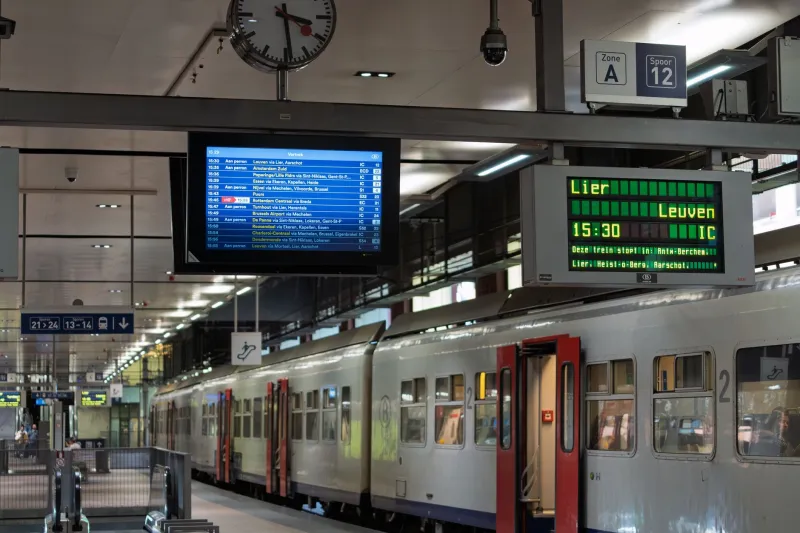
There is a particular kind of Interrail panic that has nothing to do with a delayed train. You are standing on a platform in Cologne, ticket in hand, convinced your connection leaves at 12:05. The departure board says 11:05. Your phone still thinks it is in Manchester. The station clock agrees with the board, the app agrees with your phone, and somewhere in the middle your pulse has started doing a drum solo.
Time zones are one of the least glamorous parts of European rail travel, but they are also one of the easiest ways to lose twenty minutes you did not need to lose. The good news is that a short, repeatable routine sorts out almost every confusion. No maths degree required.
The railway is local, even when your phone is not
Published rail times are almost always local time at the station where the event happens. A train leaving Brussels at 07:42 means 07:42 in Brussels, whether that is CET or CEST. An arrival into London at 14:10 means 14:10 in London, on GMT or BST. Timetables are not usually written in UTC, and they are not trying to trick you.
The trouble starts when the screen in your hand has a different idea of where you are. Phones are usually good at switching time zones, but they can lag after a border crossing, especially on a moving train with patchy signal. Some journey planners display times in your device's time zone. Others show the local time at each station. A few are clear about which is which; plenty are not.
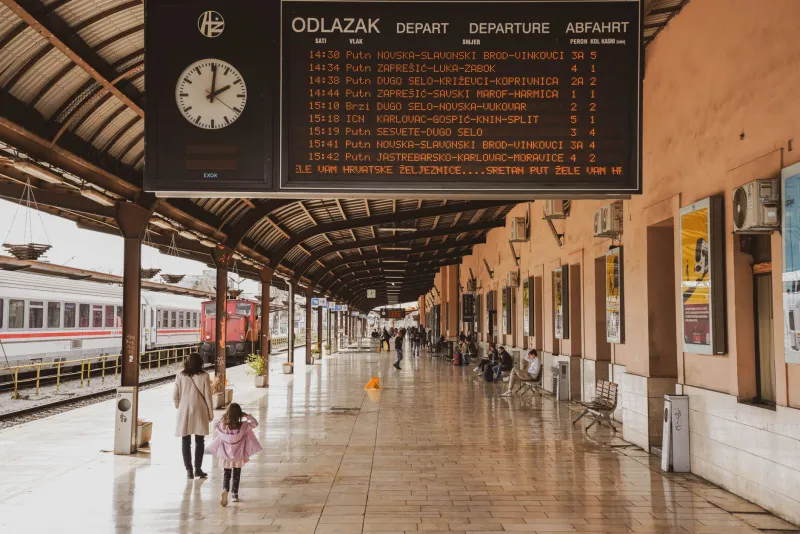
That is why the printed poster by the ticket machine, the station clock above the platforms and the app on your phone can all appear to disagree without anyone actually being wrong. They are just speaking different clock languages.
Why the overnight leg looks impossible
The time-zone trap is at its sneakiest on overnight trains that cross a border while you sleep. Imagine leaving Paris in the evening and arriving in London the next morning. The departure time is in Paris, on Central European Time. The arrival time is in London, on UK time. During winter, the UK is one hour behind France.
So a journey that takes a bit over two hours can look on paper as though it takes barely any time at all. The arrival clock may even read only a few minutes after the departure clock. That does not mean the train has discovered teleportation. It means the clocks changed while you were asleep or, on a daytime crossing, while you were queuing for the buffet car.
If you are setting an alarm for an early arrival, set it using the local arrival time shown for the destination. Then check the journey duration as well. If the maths feels odd, trust the duration: a two-hour journey is still a two-hour journey, even if the clock face suggests otherwise.
Before you board: three checks, thirty seconds
This is the routine worth building into every transfer day.
- Check your phone's time zone, not just the time. Open the clock app or settings and confirm the city. If it says Manchester while you are in Munich, switch it to automatic and give it a moment. If it still refuses, do not rely on it for departure times.
- Compare with the station clock and the platform display. In most major stations, the big clock and the departure board are the local source of truth. If they agree with each other, believe them over your phone.
- Turn the connection into minutes, not clock faces. If you arrive at 14:05 and your next train leaves at 14:35, that is thirty minutes. It does not matter what time zone your app is using, as long as both times are for the same station. Thinking in durations is far safer than staring at two clock times and hoping.
A screenshot of the connection is surprisingly useful, too. It gives you a fixed reference when the app refreshes, the signal drops or your phone decides to have an opinion about which country you are in.
Connections are about buffers, not bravery
UK travellers are used to departure boards that switch between GMT and BST without much ceremony. On the continent, the same switch happens in late March and late October, and it can make a tight connection feel like a riddle. A train that appears to arrive after it departs is usually just a timetable crossing a daylight-saving boundary. A connection that looks impossibly long may be the reverse.
On those weekends, give yourself more buffer than usual. Printed posters may be out of date. Apps usually update, but not always instantly. If you have a choice, avoid a twenty-minute connection on the night the clocks change. Thirty or forty minutes is not wasted time; it is insurance against a timetable that is technically correct and emotionally confusing.
The platform sprint test
If you ever think you are about to miss a train because of a clock, pause for one second and look at the station clock. Then look at the departure board. If the board still lists your train and the platform is not empty, walk briskly. If the board has moved on, ask staff before you sprint across a concourse with a rucksack bouncing off your back.
Nine times out of ten, the train is not early. Your phone is just still in the wrong country. The clock, not a delay, caused the panic.
Treat time zones as part of route planning, not an afterthought. A quick check before you board, a habit of thinking in journey minutes and a sensible buffer on clock-change weekends will keep your Interrail trip running on local time and your connections running on calm.