When the Timetable Bites Back: A Calm Plan for Interrail Delays and Cancellations
The Interrail Station approach to disruption is simple: slow down, get the facts, then make one good decision at a time. A cancelled train is annoying, but it is rarely the end of the trip. In 2026, most major European operators have app-based updates and English-speaking staff at main stations. The trap is panic-booking the first thing you see, or standing in the wrong queue while your options vanish. This checklist is designed to be read before you need it — and then screenshotted for the day it happens.
Before you need it
- Save the apps you are likely to use: Rail Planner, DB Navigator, SNCF Connect, Trenitalia, Renfe, ÖBB and your accommodation booking.
- Screenshot your pass, reservations, tickets and passport page. Do not rely on signal in a crowded station.
- Note the last train of the day and one alternative for each key leg. This takes five minutes and saves an hour later.
- Pack a small overnight kit: charger, toothbrush, medication, a clean T-shirt, eye mask and a refillable bottle.
- Learn four useful phrases. You do not need fluency; you need to be understood.
- Leave a buffer before any separate Eurostar or ferry booking. Three hours is sensible, not excessive.
The moment it happens
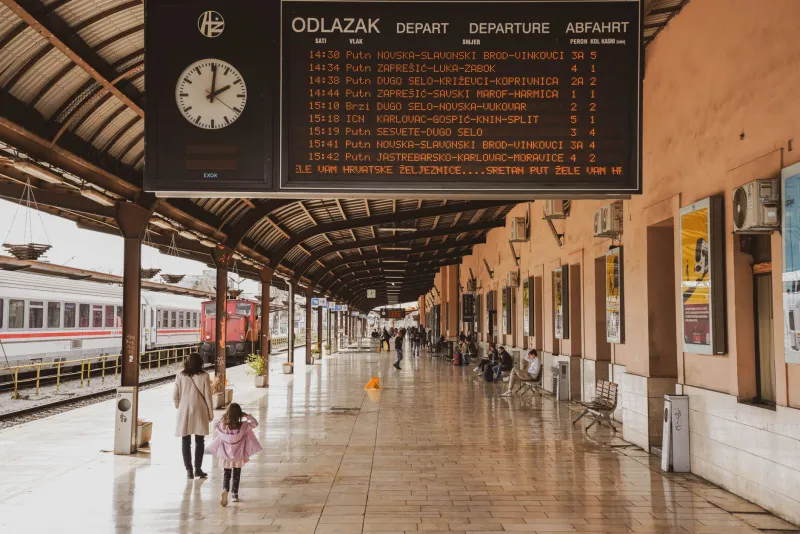
- Stop and confirm. Check the official departure board and the operator app. A delay can become a cancellation, and a cancellation can become a bus replacement. Photograph the board and your ticket.
- Ask platform staff for written confirmation if the delay is over 60 minutes. EU passenger rights may apply, but the exact compensation depends on the operator, ticket type and cause. Interrail pass conditions also matter, especially for reservations.
- Open Rail Planner and the operator app. Search the next connection. Ignore third-party sites until you know the official options; they often show routes that do not exist.
- Go to the ticket desk or assistance point. Say clearly: I missed this connection because the previous train was delayed. What is the next connection under my pass or ticket? Ask them to rebook any reservation without charge if the operator caused the delay.
- If you are stuck overnight, ask about accommodation before you leave the station. EU rules can include hotel support for some overnight delays, but it is not automatic on every ticket. Keep receipts and get written confirmation.
- Protect onward Eurostar or ferry connections immediately. If it is a separate ticket, the rail operator is not obliged to rebook you. Contact Eurostar or the ferry company before you arrive; some will move you for a fee, some will not. Travel insurance helps here.
At the desk: phrases that work
- French: Mon train est annulé. Quel est le prochain train pour ... ?
- German: Mein Zug fällt aus. Wie komme ich am besten nach ... ?
- Italian: Il treno è cancellato. Qual è il prossimo collegamento per ... ?
- Spanish: El tren está cancelado. ¿Cuál es la próxima conexión para ... ?
Ask for a delay certificate: une attestation de retard, Verspätungsbestätigung, certificato di ritardo, certificado de retraso. Keep it with your ticket. If staff say no, ask for the station manager or the operator's assistance desk. Stay polite; the person in front of you is not the problem.
When to abandon the route
Rebuild the plan if no connection gets you to your bed before midnight, if the next option adds more than four hours, if you are stuck with no accommodation, or if staff are overwhelmed and the board is frozen. Choose a hub with frequent trains and a bed. A night in Lyon, Cologne or Bologna is not failure; it is a route change. Book directly with the hotel and keep the cancellation policy visible.
The overnight kit
A charger, a power bank, a toothbrush, any medication, a clean T-shirt, a refillable bottle and a soft eye mask will make a station bench or a budget hotel far more bearable. Add a few snacks and a printed copy of your pass and reservations. If you wear contact lenses, pack solution. These are small things that stop a delay turning into a crisis.
Protecting Eurostar and ferry connections
Leave at least three hours between a European arrival and a Eurostar or ferry if you are on separate tickets. Know the last check-in time. If you miss it, call the operator before you arrive; some will move you for a fee, some will not. If the connection is on one through ticket, you have stronger protection — but always ask for confirmation in writing.
The calm-down checklist
- Confirm the cancellation or delay on the official board and app.
- Photograph everything: board, ticket, reservation, delay certificate.
- Ask for the next connection under your pass or ticket.
- Rebook reservations at the desk, not just in the app.
- Ask about overnight accommodation before leaving the station.
- Contact Eurostar or the ferry company immediately if onward plans are at risk.
- Tell someone where you are and what your new plan is.
- Keep every receipt.
Disruption is part of rail travel, but it does not have to define the trip. Get the facts, ask the right question, and give yourself permission to change the plan. The train you end up on is still part of the adventure.