Eight European Rail Stations That Scare First-Timers — and the Calm Way Through Each
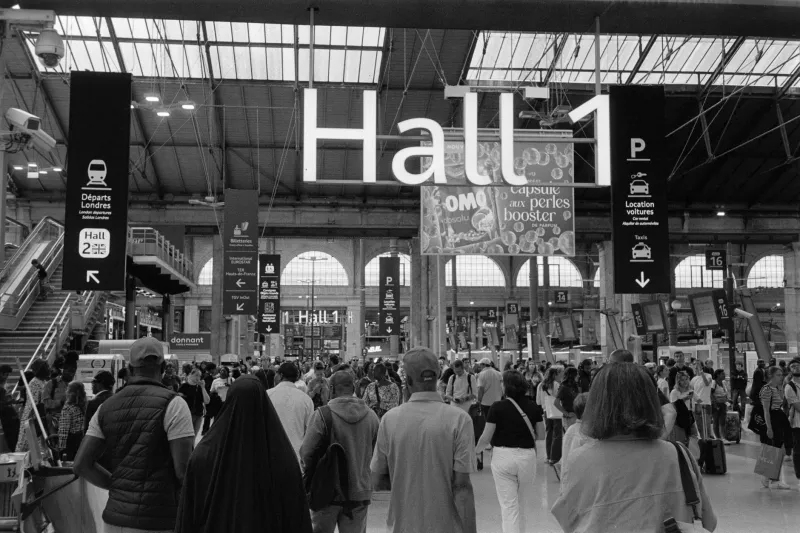
Your first solo change at a big European station can feel like being dropped into a foreign-language episode of The Apprentice. The signs are there, the platforms are there, but everyone else seems to know a secret handshake. Good news: they do not. They have just done it before.
This guide covers eight stations that regularly flummox UK travellers. For each one you get the arrival move, a luggage plan, a useful phrase, a realistic connection buffer, and a comparison to a station you already know. It will not make Gare du Nord quiet. It will make it readable.
The universal rules
Before the list, four habits. First, follow the departure boards, not the platform numbers in your app; platforms can change. Second, give yourself more buffer than you think. Third, keep your ticket or pass where you can reach it without taking off your backpack. Fourth, if you are lost, look for the information desk rather than a random person in a uniform who may be a cleaner.
Paris Gare du Nord
The comparison: King's Cross on a match day, crossed with an airport terminal. It is busy, layered, and not remotely interested in your feelings.
Arrival move: follow signs for Metro, RER, Grandes Lignes or Eurostar before you go anywhere else. The station has distinct zones, and wandering can add ten minutes. If you are changing to Eurostar, allow at least 60 minutes and follow the Eurostar signs immediately.
Luggage: lockers are limited and popular. Use the official consigne or a left-luggage shop nearby if the lockers are full. Do not leave bags unattended.
Phrase: 'Où sont les consignes ?' (Where are the lockers?)
Buffer: 45 to 60 minutes for a cross-station change; 60 minutes plus for Eurostar.
Milan Centrale
The comparison: Manchester Piccadilly's bustle inside a marble cathedral. It is grand, echoey, and the platforms are further away than they look.
Arrival move: head to the main concourse and find your platform on the big boards. The station has two levels of shops and services, so do not panic if your platform is not obvious. Allow time to walk to the far platforms.
Luggage: there is a staffed left-luggage office and lockers. Keep the receipt. If you are heading to the metro, pack light because stairs and escalators are not always where you expect.
Phrase: 'Dov'è la biglietteria?' (Where is the ticket office?)
Buffer: 30 to 45 minutes. Add 15 minutes if you are changing to a regional train.
Budapest Keleti
The comparison: a faded grand hotel that happens to have trains. It is atmospheric, a bit scruffy, and the signage can feel like a suggestion.
Arrival move: find the main hall and the departure boards. Platforms are usually announced relatively late, so do not sprint. If you need tickets, use the machines or the staffed desks, and keep small change.
Luggage: lockers exist but can be fiddly. The left-luggage office is a safer bet for larger bags. Keep your passport on you.
Phrase: 'Hol van a csomagmegőrző?' (Where is the luggage storage?)
Buffer: 30 to 40 minutes. Add time if you are crossing to Metro line 2.
Rome Termini
The comparison: a shopping centre with trains attached. It is big, bright, and full of people going in every direction.
Arrival move: follow signs for your platform via the main concourse. The station is split over levels, so check whether your train leaves from the main tracks or a suburban platform. The Leonardo Express to the airport is well signed but busy.
Luggage: left-luggage is available, but queues can be long. Use lockers if you are confident with the system, and keep your bag with you in the main hall.
Phrase: 'Dove posso lasciare i bagagli?' (Where can I leave my luggage?)
Buffer: 30 to 45 minutes. Add 20 minutes if you are changing to a bus or metro.
Barcelona Sants
The comparison: a low-ceiling airport terminal with a train habit. It is functional rather than beautiful, and the layout can feel like a maze.
Arrival move: find the main departure hall and check the boards. Platforms are downstairs from the main concourse. If you are heading to the metro, follow the red and green signs carefully.
Luggage: lockers are available, and there is a left-luggage service. Keep your ticket with you because you may need it to exit.
Phrase: 'On puc deixar l'equipatge?' (Where can I leave my luggage? — Catalan)
Buffer: 30 to 40 minutes. Add 15 minutes for a metro change.
Brussels Midi/Zuid
The comparison: St Pancras's less charming cousin. It does the job, but the Eurostar zone and the domestic platforms feel like different worlds.
Arrival move: if you are on Eurostar, follow the signs for the main hall and then your onward platform. If you are changing from a domestic train to Eurostar, allow extra time for security and passport checks. The station has two names, so do not be confused by Midi and Zuid.
Luggage: lockers are available, but the Eurostar area has its own rules. Do not plan a long luggage stop if you are tight for a connection.
Phrase: 'Où sont les consignes ?' (Where are the lockers? — French)
Buffer: 25 to 30 minutes for domestic changes; 60 minutes plus for Eurostar.
Amsterdam Centraal
The comparison: a wind tunnel with bicycles, trams and ferries. It is beautiful from the outside and hectic inside.
Arrival move: follow the signs for the main hall, then look for your platform. The station is compact but busy, and the bike traffic outside is its own weather system. If you are heading into the city, follow the tram signs.
Luggage: lockers are available and popular. Use the machines, keep the receipt, and do not leave bags in the bike racks. Obviously.
Phrase: 'Waar is de bagagekluis?' (Where is the luggage locker?)
Buffer: 20 to 30 minutes. Add 10 minutes if you are catching a ferry or tram.
Prague hlavní nádraží
The comparison: Victoria Station after a glamorous renovation, with a bit more intrigue. It is easier than its reputation, but the entrances and levels can confuse.
Arrival move: follow signs for the main hall and the departure boards. The station has a newer and older section, so check which one your platform is in. If you are heading to the metro, follow the red C line signs.
Luggage: lockers and left-luggage are available. Keep your bag close in the main hall, especially at night.
Phrase: 'Kde je úschovna zavazadel?' (Where is the luggage storage?)
Buffer: 25 to 35 minutes. Add 10 minutes if you are changing to the metro.
The calm-platform checklist
Before you arrive, screenshot your ticket and platform information. On arrival, find the boards before you find coffee. Give yourself a buffer, keep your luggage simple, and learn one phrase for luggage storage. And remember: the station is not testing you. It is just a building with trains. You have done King's Cross at rush hour. You can do this.