Sleeper Trains in 2026: The Honest Truth About Night Journeys on an Interrail Pass
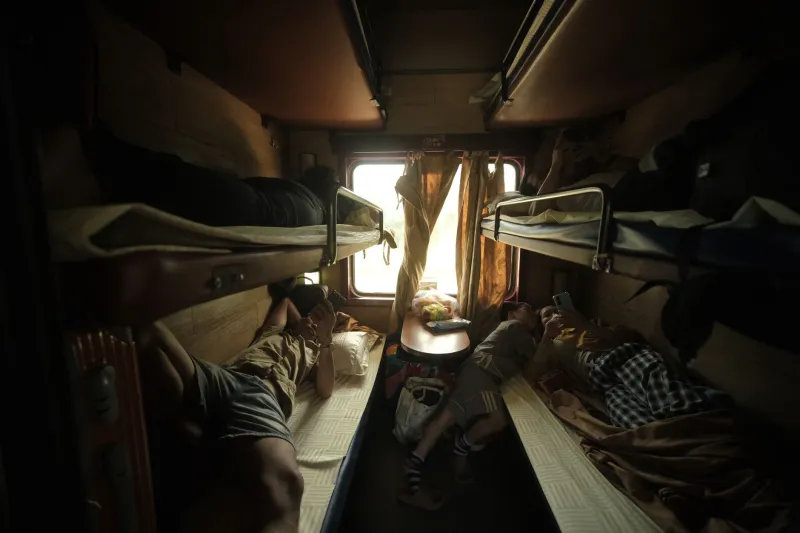
Every autumn, someone posts a photo of a bunk with a tiny reading lamp and a window full of Alpine dawn, and a thousand UK Interrailers book a sleeper the same afternoon. Some of them have the best night of their trip. Some of them spend eight hours in a six-berth couchette next to the door, listening to it slam at every signal, and get off in Vienna feeling like they've been posted through a letterbox.
Both experiences are available for roughly the same money. The difference is knowing what you're buying. So here's the unglamorous version.
Your pass doesn't cover the bed
The most expensive misunderstanding in Interrail planning: a Global Pass gets you onto the train, not into a bunk. Couchettes and sleeper cabins carry a compulsory reservation, and that supplement can easily cost more than the hostel you were going to skip. Budget for it separately — it isn't a small fee, it's a hotel room that moves.
Know your cabin classes before you book
- Reclining seat. Cheapest reservation on the train, and it shows. Fine for a four-hour hop, brutal for fourteen.
- Couchette, six berths. A padded bunk, a thin duvet, strangers above and below, a washbasin at the end of the corridor. Often available as a women-only compartment on the bigger operators.
- Couchette, four berths. Noticeably more room, noticeably less snoring. Worth the extra if you're over about 5ft 10.
- Sleeper cabin, one to three berths. A proper bed, a sink, sometimes an en-suite shower, breakfast included on many services.
- Deluxe or private. En-suite, absurdly civilised, priced accordingly.
What it actually costs in 2026
Treat these as shapes rather than quotes, because prices move with season and route. On the main Nightjet services out of Brussels, Paris and Amsterdam, a seat reservation can come in under €20, a six-berth couchette typically lands somewhere between €30 and €60 per person, a four-berth a little more, and a genuine sleeper cabin comfortably over €100 — occasionally double that in peak August. Put that number next to the hostel you were going to book and the decision usually makes itself.
Book through the operator's own site where you can, and book early. Reservations open months ahead and the good cabins vanish first.
Luggage is the bit nobody photographs
You get a shelf, your bunk, and in a couchette a bit of floor under the bottom bed. A 60-litre backpack is a squeeze. Bring a soft bag rather than a hard case, keep your passport and cards on you (there are no lockers on board), and accept that you will not be able to open your luggage in the dark without waking four people.
Showers, sinks and the 6am queue
Sleeper cabins on the newer trains have a sink and a shower; couchettes get a washbasin at the end of the corridor and that's your lot. The shower cubicle is roughly the size of a phone box, and by six in the morning everyone has had the same idea. Pack flip-flops and a microfibre towel, and board early rather than last.
Getting there from the UK
The departures that actually matter to British travellers are the evening runs out of Brussels and Paris. Eurostar in the afternoon, dinner in the city, board around 19:00-20:00, wake up in Vienna, Berlin or the Alps. There's also the Brussels–Prague service via Rotterdam, Amsterdam and Dresden, which is a tidy way to skip a day of German timetable admin entirely.
When a sleeper really saves money
Brussels to Vienna is the classic. Daytime means a very long day, at least one change, a hostel night you'd have to pay for anyway, and two travel days off your pass. The sleeper means one overnight and a supplement that's often cheaper than the room you didn't book. The same logic works on Paris–Berlin, Amsterdam–Zurich and the long Munich–Italy runs.
Rule of thumb: if the daytime version needs an overnight stop anyway, the sleeper usually wins. If it doesn't, it usually doesn't.
When it doesn't
Short hops. If a daytime train gets you there in four hours and the berth supplement costs €50, you're paying good money to arrive shattered at seven in the morning with nowhere to leave your bag. Same story on routes where daytime trains need no reservation at all. And on a one-week trip, burning a travel day on a night train you barely slept on is a poor trade — count your days before you count your romantic notions.
Five mistakes to avoid in 2026
- Leaving it late. Summer couchettes sell out months ahead, and sleeper cabins go first. If a specific date matters, book it the day reservations open.
- Booking a six-berth when you need to function the next day. If tomorrow involves a hike, a museum or a meeting, pay for the four-berth or take a daytime train.
- Turning up with a hard-shell suitcase. Soft bags only. This is not negotiable in a couchette.
- Ignoring the travel-day rules. A direct overnight run leaving after 19:00 often only uses one travel day, but add a change of trains and it can cost you two. Read the conditions for your exact service rather than relying on a forum post from years ago.
- Staying in the station bar until ten minutes before departure. Half the carriage will already be asleep and the luggage rack will already be full. Board early, claim your space, then go and find the lounge car.
The verdict
Take one sleeper on your trip, not five. Pick the longest leg, book a couchette with fewer berths if the budget stretches, eat before you board, and treat the whole thing as a story rather than a hotel. The Alps at dawn through a scratched window really are as good as the photos. Just don't expect to arrive refreshed — expect to arrive with a story and a slightly stiff neck, which is more or less the Interrail experience in miniature.