Quiet Coach, Loud Crisps: Nine Unwritten Rules of European Train Etiquette in 2026
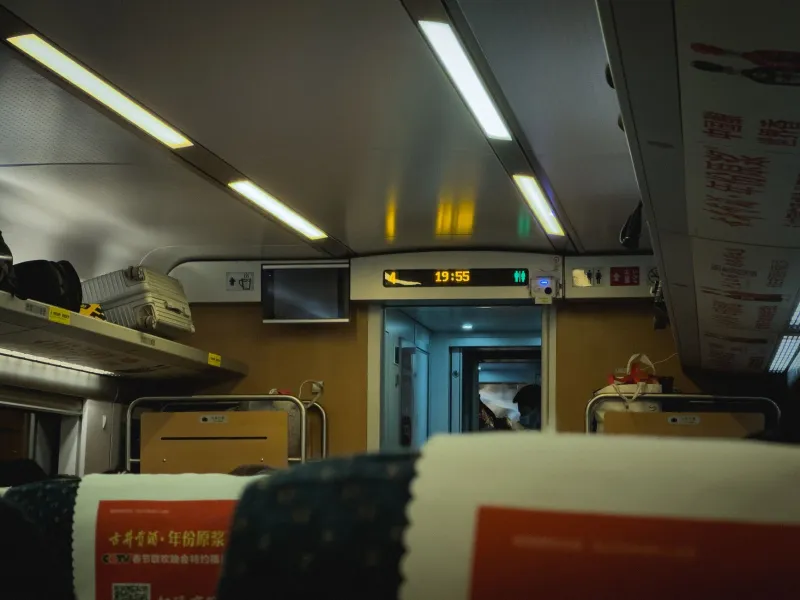
There's a particular look a first-time Interrailer gives a carriage full of Italians at 9am on a Tuesday. Slightly hunted. Clutching a reservation printout. Convinced they've done something wrong.
They haven't. They've just arrived with a set of habits built for UK trains and UK passengers, and none of them quite fit. Nothing here is enforced. Nobody's going to fine you for putting your feet on the seat opposite (well, someone might tut). But the small codes are what make a long rail day pleasant, and learning them is half the fun of being on the continent in the first place.
So, nine rules. Not rules exactly. More like things everyone else already knows.
1. Your seat number is a real thing
In the UK we treat a reservation as a gentle hint. In much of Europe it's closer to a deed of ownership, and the evidence is visible: little paper slips jammed into the seat-back in Italy, illuminated reservation displays in Germany, a printed list of names by the door in France.
If someone is in your seat, say so — politely, with your reservation in hand, pointing at the number. Nine times out of ten they'll be apologetic and gone in fifteen seconds. If it turns into a thing, find the conductor rather than escalating it yourself. And if you're the one who's drifted two seats along because the carriage was empty at departure: watch the display. Those seats fill up.
2. The quiet coach is not a library
It's stricter than that. The quiet coach (Ruhezone, voiture silencieuse, vagón silencioso) is where people sleep, work and recover from the night before, and it operates on a different social contract. Headphones must actually be inaudible from the next row. Crisps are a declaration of war. Phone calls — even the apologetic one you take at a whisper — belong in the vestibule, and if you're in a quiet coach, walk through two carriages first.
Conversely, the non-quiet coach is not a library either. Don't glare at the family playing cards. If you want silence, book the right carriage; it's usually free to select.
3. Luggage has a home and it isn't the seat next to you
Racks by the door. Overhead shelves. The gap behind the last row. Anything but the seat that somebody has paid eleven euros to reserve.
One rucksack per person in the overhead is fine. Two enormous wheelie cases side by side across the overhead on a busy Friday train is a hostage situation. On busy routes, keep the big bag on the floor by your knees at peak times if the rack is full — and keep the bag's straps and handles out of the aisle, where a trolley will find them.
4. Board like you're not being chased
UK stations train us to queue at the barrier twenty minutes early. On the continent, the barrier is usually open and everyone walks to the platform, then walks further down it. The trick isn't queuing harder — it's walking to the far end of the train, where the carriages are emptier.
Try not to jump the queue at the door, and let people off before you get on. This sounds obvious. It is apparently very hard for everyone, everywhere.
5. Picnic, yes. Fumigation, no
Eating on trains is normal and good and one of the great pleasures of a rail pass. Bring bread, cheese, tomatoes, a proper knife if you're brave. But there's a hierarchy of smells: a ham baguette is fine, a boiled egg at 7am in a warm carriage is an act of aggression, and anything involving hot tuna will make you famous in a way you don't want.
If you're cracking out something powerful, offer a bit to your neighbour. It changes the mood entirely.
6. Headphone bleed is the real crime
The man watching TikTok without headphones is the universal villain of European rail. Don't be him. Also don't be the person on a video call with the speaker on, narrating the scenery to the other end of the carriage.
Small practical note: bring wired headphones. Bluetooth is fine until the battery dies on hour six, and the charging socket you were counting on might be at the other end of the carriage, or broken, or behind someone's suitcase.
7. Have your ticket or pass ready, and be pleasant about it
Checks happen constantly — the Swiss go through with almost comedic efficiency, and in some countries they come round twice. Keep your pass in the same pocket all day and have the QR code ready before they reach you, not after a two-minute rummage.
If your reservation sits in the wrong coach because you boarded the rear half and the front half goes to a different city — which happens — don't argue. The guard has heard it all and has no ability to care. Explain, be polite, and let them move you.
8. Doors, windows and the air conditioning wars
Don't slam doors, especially the heavy manual ones on older rolling stock — a slam echoes down three carriages. On older trains with opening windows, the etiquette is: ask before you open or close one, and never fight it out silently with a stranger for six hours.
On air-conditioned trains, closing the window isn't a thing, but the seat-back blinds are, and a compromise is always possible. Also: on regional trains, don't recline a seat at all unless it's designed to. Nobody expects it and nobody enjoys it.
9. The seat-swap conversation, and leaving the carriage as you found it
The last one is the social bit. Someone's got your seat, or your group of four has been scattered, or a couple wants to sit together. The asking is easy if you do it right: smile, show the reservation, use whatever's local. 'Scusi.' 'Entschuldigung.' 'Excusez-moi.' It works.
Don't take the seat swap that puts you in a downgrade without saying so — and don't expect anyone to take yours. And when you leave, take the apple core, the coffee cup and the wrapper with you. The cleaner who gets twenty minutes between termini will thank you, silently, from a distance, which is the most European thing of all.
The one-line version
Keep your voice low, your bag off the seat, your food inoffensive, and your passport where you can reach it. Do that and nine hours in a carriage becomes one of the best parts of the trip rather than the price of getting somewhere.