Where the Passport Comes Out: Border Stations in 2026 and How Much Buffer to Build
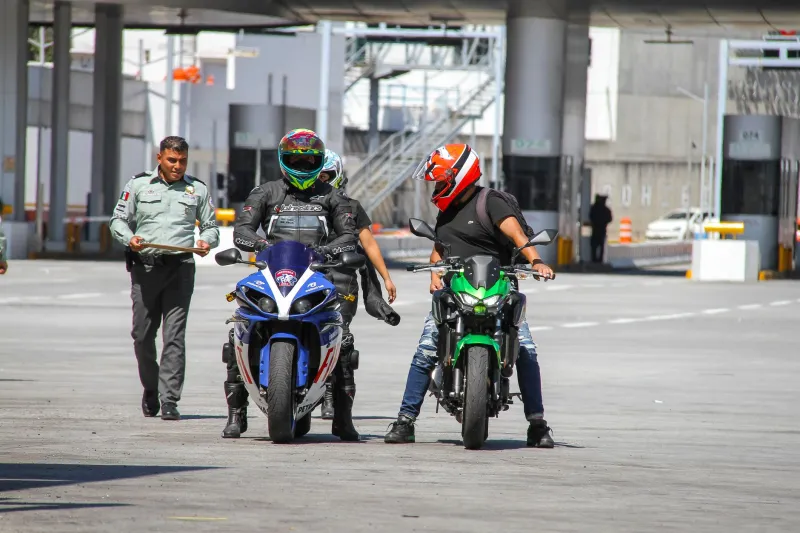
Here's the thing nobody puts on the Interrail poster: your pass gets you onto the train, but it does absolutely nothing about the person with the hand-held scanner. Most of your trip will be frictionless — hop on, hop off, no drama. Then one morning you'll be somewhere near a mountain and a border guard will ask for your passport while you're still holding a paper cup of coffee, and you'll realise you didn't build in any time for it.
This is the practical version. Where the checks actually happen, which stations eat your schedule, and how much slack to leave in 2026.
The pass is not a passport
Worth saying plainly for anyone doing their first big loop: an Interrail pass is a ticket, not a travel document. You still need a valid UK passport — the general rule is at least three months beyond your planned departure from the EU and issued within the last ten years — and you're still subject to every check any country fancies running.
The 2026 wrinkle is biometrics. The EU's Entry/Exit System has been phasing in, replacing wet passport stamps with fingerprints and a face scan on first entry. In practice that means your first crossing into the Schengen area can be slower than you expect, and later crossings faster, because you're already in the system. Don't assume the first one will be quick just because it's a Sunday morning.
Basel Badischer Bahnhof: the station that belongs to the wrong country
A station that is German — run by DB, German signage, German police — sitting on Swiss soil. Swiss domestic tickets are valid there, and the trams outside are Basel's, but cross the platform and you're technically entering Germany.
For Interrail purposes it's mostly a satisfying curiosity rather than a queue. Switzerland and Germany are both in Schengen, so there's no fixed checkpoint. But Germany reintroduced internal controls on several land borders and they get extended in rolling six-month blocks, so officers do walk the ICEs between Basel and Freiburg. It's a thirty-second look at a passport, usually, but it happens on the train and it happens after departure. If you're connecting at Basel SBB with twenty minutes to spare, that's the sort of thing that turns into a missed train. Give it forty.
Brennero/Brenner: the border that never really went away
Austria has been running checks at the Brenner route for years, and 2026 is no different. Trains between Innsbruck and Bolzano are stopped, sometimes at the station, sometimes on the approach, and officers come through the carriages. It's a genuine border post in all but paperwork.
The good news is that it's disciplined and fast. The bad news is that it's on one of the most beautiful, most heavily used Interrail corridors in Europe, and a fifteen-minute stop has a habit of becoming forty when a train is busy. If you're changing at Bolzano or Verona for a connection onward, don't book yourself a tight one.
Ventimiglia and the Riviera line
Ventimiglia is the scruffy, sunlit hinge between Italy and France, and it's where a lot of people get caught out because they treat it as a simple change of train. It is not. French police routinely work the trains between Ventimiglia and Menton, and the station itself has a habit of producing a checkpoint on the platform.
Buffer advice: this is a 45-minute connection, minimum, if you're changing here. The station is pleasant enough to wait in — there's a decent bar and a sea view if you walk five minutes — so it's not a hardship. Just don't plan on the eight-minute change you saw on the app.
The eastern edges, where the queue is the point
Once you head east of the Schengen core, the pace changes and the checks become the main event rather than an interruption.
- Przemyśl, Poland. The gateway to Ukraine. Sleeper connections here involve real border formalities, wide tracks and long waits. Interrail doesn't cover Ukraine, so check exactly what your pass is doing for you before you build this into a plan.
- Záhony/Chop, Hungary–Ukraine. Similar story, similar patience required.
- Röszke/Kelebia, Hungary–Serbia. Hungarian border police board the train and work through the carriages. It's efficient but unhurried. Ninety minutes for a connection is not paranoid, it's sensible.
- Kapıkule, Bulgaria–Turkey. The classic eastern gateway. Interrail is valid into Istanbul, but the border itself is a proper, old-fashioned affair with a long platform and a lot of standing about.
- Ungheni, Romania–Moldova. A gauge change as well as a border, which is a whole afternoon's entertainment.
Rule of thumb for the eastern edges: assume the border will take an hour, and be delighted when it takes twenty.
Eurostar: the one border you clear before you board
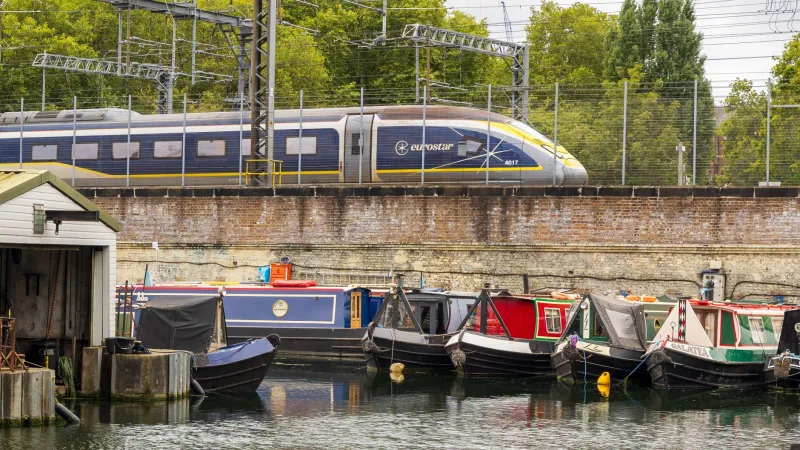
London St Pancras is the odd one out in this whole guide, because you clear UK exit and Schengen entry before you get on the train. That's a blessing and a trap. It means no checks in Paris or Brussels, but it also means the queue at St Pancras is your problem now.
Seventy-five minutes before departure is the sensible minimum in 2026, and ninety if you're travelling at a peak time or with a big bag. The biometric rollout has made first-time crossings slower, not faster, and the queue doesn't care that your train is at 07:01.
Same applies in reverse: Rotterdam, Amsterdam and Brussels all have juxtaposed controls, so a tight connection into a Eurostar is the single most expensive mistake in this article.
How much buffer, honestly
A quick cheat sheet for planning connections in 2026:
- Schengen internal, no checks: 10–15 minutes is fine in most stations, 20 at somewhere like Cologne or Munich where platforms are far apart.
- Schengen internal with reintroduced checks (Germany–Austria, Austria–Italy, France–Italy, Denmark–Sweden): 45 minutes.
- Schengen entry or exit: 60–90 minutes.
- Eastern external borders: 90 minutes, and a backup plan.
- Any Eurostar: 75–90 minutes before departure.
- Night trains crossing a border at 3am: keep your passport in the pocket of the jacket you're sleeping in, not in the rucksack in the rack. Waking up, unzipping three bags and finding a document by torchlight while an officer waits is nobody's idea of a good time.
Calm versus chaotic
Calm, mostly: Basel Bad, Chiasso, Salzburg, Copenhagen Airport. Brisk but reliable: Brenner, Ventimiglia, Röszke. Bring a book and lower your expectations: Kapıkule, Przemyśl, any border after midnight.
None of this is a reason to avoid border routes. Honestly, the checks are half the texture of a long rail trip — the moment the trip stops being a series of train journeys and starts being a journey across countries. Just leave the slack in. A missed connection costs you an hour. A missed connection at 11pm in a town you can't pronounce costs you the night.