Punch First, Board Second: The Thirty-Second Ticket Habit That Keeps Your Interrail Fine-Free

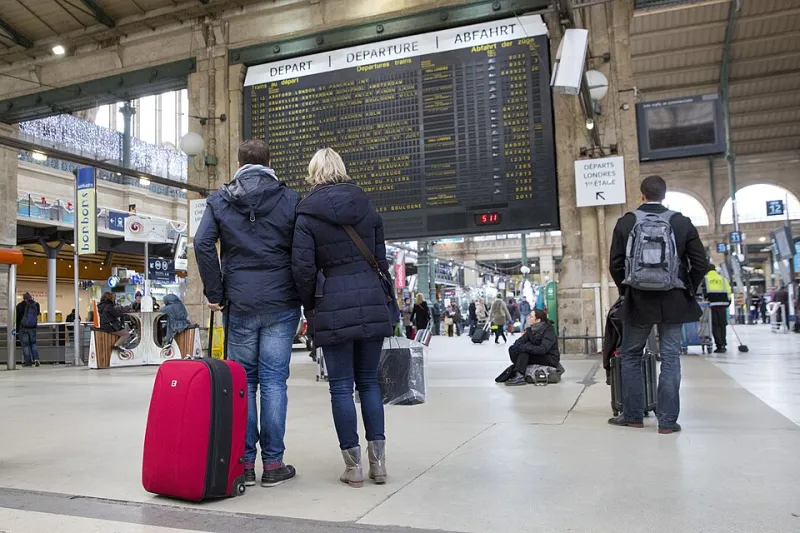
Photo by Photo by Nikolai Kolosov on Unsplash on Unsplash
British rail travel teaches you a very particular set of habits. You approach the barrier, you wave your phone at the reader, you wait for the satisfying clunk, and you walk through. If the gate opens, you are officially allowed to travel. It is a system built on infrastructure, not trust.
Then you arrive in Europe, find a perfectly ordinary platform, board a perfectly ordinary train, and discover twenty minutes later that the ticket in your hand was supposed to have been stamped in a little machine near the entrance. Nobody stopped you. Nobody checked. But according to the railway, you were travelling without a valid ticket from the moment the doors closed.
Welcome to the ticket-validation trap. It is one of the easiest Interrail mistakes to make and one of the most annoying to fix, especially when you are juggling a mobile pass, a reservation coupon and a paper ticket for a regional hop that seemed beautifully simple at the time.
Why an unstamped ticket is just expensive card
In the UK, a ticket is valid because it has been issued and, usually, because a barrier or guard has accepted it. In many European countries, a paper ticket is only valid once it has been validated — stamped, punched, printed with a time, or otherwise marked by a machine or a member of staff. Until that happens, it is a piece of card with a promise on it.
The logic is old-fashioned but sensible enough: validation proves you started your journey now, not three hours ago, and it stops the same paper ticket being used again and again on a route where nobody checks every door. The problem for visitors is that the rule is often communicated in tiny print, in a language you are still decoding at 7:40am, on a platform where the departure board is already doing something dramatic.
This is not usually about your Interrail pass itself. A paper Interrail pass needs to be activated at a ticket office before your first travel day, and a mobile pass lives behind its barcode in the app. Those are travel documents with their own rules. The validation trap is more often about separate point-to-point tickets, regional supplements, seat reservations printed on paper, and the sort of local ticket you buy for a short hop when you decide to save a travel day.
Where the machines actually hide
Ticket-validation machines are masters of camouflage. They are rarely in the middle of the platform where you would naturally look. They tend to be near the entrance to the platform, by the stairs, beside the ticket office, tucked under a departure screen, or mounted on a pillar that looks suspiciously plain.
The classic European model is a small yellow or orange box with a slot. You push the ticket in, hear a thunk, and retrieve it with a small stamp or a line of print. Some machines are grey, some are blue, some are integrated into ticket validators for contactless cards, and some look so much like a bin that you would walk past them without a second glance.
They are most common where regional travel still runs on paper: Italy, Portugal, parts of France, Spain, Greece and various local networks in eastern Europe. You will also meet them on some buses, metro systems and ferry terminals, which is a reminder that the habit is not strictly about trains.
The key phrase to look for is the local version of “validate”: convalidare in Italy, composter in France, validar in Spain and Portugal. If your ticket has a magnetic stripe, a printed barcode, a QR code, or a message saying it is already valid, do not shove it into a punch machine just because everyone else is doing it. Read the ticket first. If in doubt, ask a member of staff before boarding, not after.
What needs stamping — and what doesn’t
A mobile Interrail pass does not need to be stamped. It needs to be activated, have the correct travel day added, and be ready to show its barcode. Your phone is the ticket. A paper Interrail pass is similar: it must be validated at the ticket office before first use, and then you fill in the travel days as instructed. That is a different process from stamping a local ticket on the platform.
Reservations are where things get blurry. A seat reservation for a high-speed train is often just a coupon with a coach and seat number. It may not need platform validation. But some paper reservations, supplements and regional tickets do carry instructions to validate before boarding. The rule of thumb is simple: if the ticket or coupon has a blank box, a magnetic stripe and a local instruction to stamp it, treat it as needing validation. If it is a mobile reservation attached to your pass, follow the app instructions.
And if you are travelling on a separate paper ticket bought from a local operator, assume nothing. Look for a machine. Look for instructions. Ask at the ticket desk. The thirty seconds you spend checking are considerably cheaper than the fine you might meet later.
The fine conversation: what to say when caught
If an inspector finds an unvalidated ticket, stay calm and be honest. Do not pretend you did not understand the language if you clearly did, and do not launch into a speech about British barriers. The inspector has heard every version of that story and is usually more interested in whether you are trying it on than in whether you are confused.
A simple approach works best: apologise, explain that you are a visitor and did not realise the ticket needed validating, and ask whether you can validate it now or pay the difference at the next opportunity. In some countries the inspector will accept that; in others the fine is fixed and non-negotiable. Either way, being polite and cooperative tends to produce a better outcome than arguing about how unfair it is.
Keep your Interrail pass, reservation and any local ticket together. If you are using a mobile pass, have the barcode ready before the inspector reaches you. Fumbling for a phone in a tunnel is not a crime, but it does make the conversation longer.
The thirty-second platform ritual
Fold this into your departure-board routine and it becomes automatic. Before you walk to the train, stop and do three things. First, check the ticket: does it say validate, stamp, compost or convalidare? Second, look around the platform entrance for a machine. Third, if you are unsure, ask a member of staff or the ticket office. That is it. Thirty seconds, no drama.
If you are travelling on a mobile Interrail pass, use the same pause to check that the correct travel day is active and that any reservation is attached. If you are on a paper ticket, make sure the stamp is visible and the date is right. Then board with the smug confidence of someone who has read the small print.
Europe’s railways are not trying to catch you out. They are running on a different set of assumptions, and most of the time those assumptions are written in six-point type next to a machine you have already walked past. Learn the ritual once and you can spend the rest of your Interrail trip worrying about much better things — like whether the dining car has any crisps left.