Landing Gear: The 20-Minute Arrival Ritual That Turns a Strange Station Into Your City
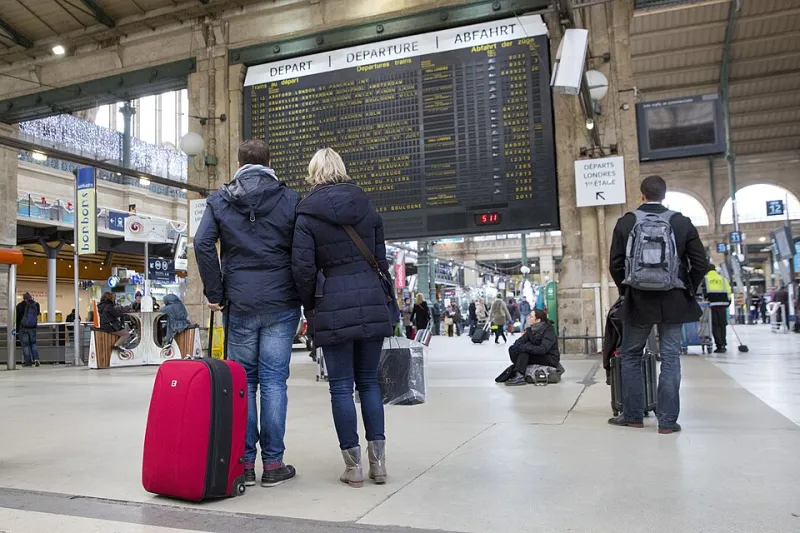
Photo: Nicolas Kovarik / European Union, 2014 / EC - Audiovisual Service, CC BY 4.0, via Wikimedia Commons
You can plan a route to the minute, know your platform, and still spend the first hour in a new city doing the international traveller shuffle: bag on, bag off, phone waving at the sky, map spinning like a compass in a storm. The train did its job. The station is doing its job. What is missing is a handover.
Think of arrival as a small, repeatable ritual rather than a sprint to the hotel. Twenty minutes, five loose blocks, no heroics. Do it once in Paris or Prague and it becomes muscle memory by city four. The aim is not to see everything immediately. The aim is to stop being a person who has just got off a train and start being a person who knows where they are going next.
Minutes 0–3: Get Off, Get Clear
Do not follow the herd. The crowd surges towards the main concourse, which is often the slowest exit and the least useful place to think. Step to the side of the platform, move your bag clear of the doors, and take one deliberate pause. Check the station name in the local language. Check the time. Check that you have your pass, reservation and phone about your person, not in the rucksack you are about to put down.
At a station like Paris Gare du Nord, this pause is worth more than any dash. The place is a city in itself, with levels, long-distance trains, RER lines and metro entrances that can all feel like the same door until you have stood still for ten seconds. At Amsterdam Centraal, the wind off the water and the tram wires overhead can make the exit signs feel like a puzzle. Pause first. Then move.
Minutes 3–7: Sort the Paper Trail
This is the part people skip, and it is the part that bites later. If today is an Interrail travel day, make sure it is activated in the app before you leave the platform area. Do not hunt for a machine to stamp or validate the pass itself — the pass lives in the app, and the QR code is your ticket. If you have bought a local paper ticket for a metro or bus, check whether it needs validating in a small machine before you board. Many European cities still use that system, and an unvalidated ticket is the same as no ticket when the inspector appears.
Keep everything in one pocket or one phone wallet: Interrail QR, seat reservation if you have one, local ticket, passport if it has been checked on board. At Milan Centrale, the concourse is grand enough to distract you from the fact that the metro entrance is downstairs and the taxi rank is out front. Sort the paper trail before you start looking for either.
Minutes 7–11: Data Before Direction
You do not need to stream a podcast on arrival. You do need to know which way the tram goes. If you are using a UK mobile plan with EU roaming, check the welcome text has landed. If you are on an eSIM, make sure it has connected. Station Wi-Fi is fine for a quick map download, but do not rely on it while walking out of the door.
Open your map, type the accommodation or first stop, and download the offline map for the city. Screenshot the walking directions. Check one onward transport option — not every option. At Barcelona Sants, that might be the metro into the centre. At Munich Hauptbahnhof, it might be the S-Bahn. At Vienna Hauptbahnhof, the trams and U-Bahn are right there, but the correct exit matters more than the correct line.
One useful habit: send your accommodation name and address to yourself in a message. If your phone dies or a map fails, a screenshot and a written address are better than a vague memory of a blue door near a square.
Minutes 11–15: Dump the Bag, Not the Day
If you are arriving before check-in, decide what happens to the bag now. Many big stations have lockers or left-luggage offices, and the price is usually worth it for a few hours of freedom. At Barcelona Sants, Milan Centrale and Munich Hauptbahnhof, bag storage is a practical first move if you want to walk out unencumbered. Keep passports, cards and anything irreplaceable with you. The locker is for the rucksack, not your whole life.
If your accommodation is a short walk away, go there first and ask to leave the bag, even if the room is not ready. If it is across town, weigh the trip. Twenty minutes of bag storage can buy you a whole afternoon. Fifteen minutes of dragging a wheelie bag through a rush-hour metro can ruin the mood before lunch.
Minutes 15–20: Set Your Compass
Now walk out of the station and turn around. Look at the building from the pavement. Note the name, the main entrance and one landmark — a church spire, a bridge, a big clock, a tram stop. This is your anchor for the rest of the day. Stations look completely different from the outside, and the exit you used on arrival may not be the one you want at midnight.
Pick one small, useful stop nearby: water, a coffee, a pastry, a SIM top-up. It gives you a reason to stand still in the new city rather than march straight into a metro tunnel. Check the return route to the station if you are leaving again tomorrow. Then put the phone away for a minute and look up.
What Not to Do in the First Hour
Do not queue at a tourist information desk to ask what to do. You can answer most of that with a map and a short walk. Do not buy a multi-day transport pass before you know how much you will actually use it. Do not wander the metro with all your luggage during rush hour if a locker is available. And do not treat the station concourse as the city. The good bit is outside.
The handover is the whole trick. Train brain is about timetables and platform changes. City brain is about queues, side streets, opening hours and finding the right door. Twenty minutes of deliberate arrival routine is enough to swap one for the other. Do it in 2026 on your first stop, then repeat it until it feels as natural as checking your platform. The train got you there. The first twenty minutes make it yours.