The Golden Window: Picking a Seat Worth Sitting In on a 2026 Interrail Train

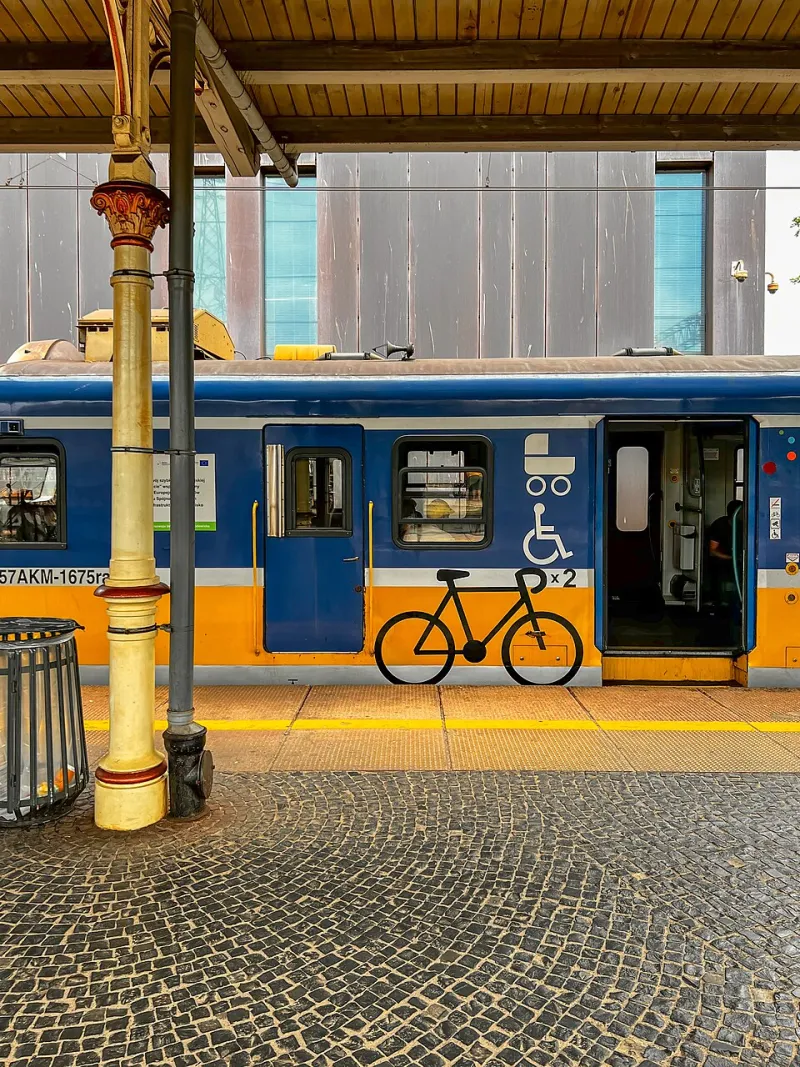
Photo by Photo by Adrien Olichon on Unsplash on Unsplash
There’s a particular kind of quiet defeat in settling into a seat you already regret. You’re rolling out of Berlin or Barcelona, the train is full, and you’ve ended up facing backwards with the sun in your eyes and your rucksack three carriages away. The good news? Most of this is avoidable with five minutes of prep before you board.
First, Work Out What You’ve Actually Booked
An Interrail pass gets you on the train. It does not, in most cases, get you a seat. Reservation rules vary wildly across Europe, and that difference matters more than most first-timers expect.
In France, Spain and Italy, high-speed trains usually require a reservation. In Germany, many long-distance trains have optional reservations, which means you can board without one but may end up standing in a busy corridor. Regional trains across the continent often have no reservations at all — you simply get on and take what’s free.
If a reservation is optional and costs a few euros, it is often worth paying on a long leg. If the system lets you choose a specific seat, even better. If it assigns one at random, you can still improve your odds by boarding early and asking the conductor or checking the carriage display. UK travellers used to picking a precise seat on LNER or Avanti will find Europe less uniform, but not unknowable.
Coach Numbers Are Not Carriage Counts
‘Coach 12’ does not automatically mean the twelfth carriage from the front. On many European trains, coach numbers run in a sequence that depends on the direction of travel, the train’s formation, or whether two units have been joined together.
Before you haul your bag down the platform, cross-check three things: the coach number on your ticket, the platform departure display, and the train composition poster usually found near the entrance to the platform. Look for ‘Wagen 12’ in German-speaking countries, ‘Voiture 12’ in France, or ‘Carrozza 12’ in Italy. If the display shows a letter or a zone — A, B, C — use that as your guide rather than guessing.
This is also where a little platform patience pays off. Boarding the wrong end of a long train can mean a ten-minute walk through swaying corridors with a heavy pack. Boarding the right coach means you can stow your bag and sit down before the scramble starts.
The Scenic Side Is a Guess Until You Check
Everyone wants the scenic side. Few people check which side that actually is before boarding.
A route map and a basic sense of direction will get you most of the way. In the northern hemisphere, the sun sits in the south, so a northbound morning train tends to have sun on the right, while an afternoon northbound leg has it on the left. Southbound it reverses. Eastbound morning trains catch the sun ahead; westbound afternoon trains catch it ahead too. None of this is exact, but it is enough to avoid the worst greenhouse seats.
On genuinely spectacular routes — the Rhine Valley, the Norwegian fjords, the Italian coast — a window seat on the correct side is worth planning for. On a dull six-hour haul across flat farmland, an aisle seat near the luggage rack may serve you better. Be honest about which kind of journey you are on.
The Luggage-Friendly End
If you are travelling with a large rucksack or suitcase, the end of the carriage often has more rack space than the middle. That is not a universal rule, but it is a useful starting point. Board near the luggage racks, stow the big bag, and keep your day bag with you.
The mistake is choosing a seat purely because it is near the rack and then discovering you cannot see your bag at all. Keep passports, phones, wallets and tickets on your person. A luggage-friendly seat is one where your bag is secure and reachable, not simply out of the aisle.
Backwards, Sun-Blinded and Other Avoidable Misery
Some seats face backwards. On many trains, seats do not rotate, and on some services the train reverses direction at a terminus. If you know backwards travel bothers you, try to choose a forward-facing seat when the reservation system allows it. If you cannot choose, board early and see what is free.
Sun is the other silent seat thief. A window seat on the sunny side can be lovely in winter and unbearable in July. Check whether the window has a blind, and do not be shy about closing it if the carriage is baking. If you want to work or read, an aisle seat is often the calmer choice.
When to Pay, When to Shrug
Pay for a reservation when the leg is long, the train is busy, or the route is one you actually want to see. Pay when the reservation is compulsory and you have no choice. Do not pay extra for a short regional hop where seats are first-come, first-served and the journey is over before the ticket check.
If you are offered a seat selection for a few euros on a scenic route, take it. If you are offered a random seat on a crowded summer train, take it anyway and board early. A mediocre seat is better than standing in the vestibule with your bag between your feet.
A Pre-Boarding Checklist
- Check the coach and seat number on your ticket, not just the train number.
- Cross-check the platform display and train composition poster.
- Decide whether you want window or aisle, forward or backward.
- Check the route direction and the likely sunny side.
- Keep your big bag near the rack and your valuables with you.
- Board early enough to stow your bag without a wrestling match.
- If someone is in your reserved seat, speak to the conductor rather than arguing in the aisle.
The Last Word
A seat is not destiny, but it is worth a small amount of thought. ‘Seat 61, coach 12’ is just a number until you know where coach 12 actually is, which way it faces, and whether the sun will be in your eyes for the next four hours. A little prep before the doors open is usually the difference between a leg you endure and a leg you enjoy.