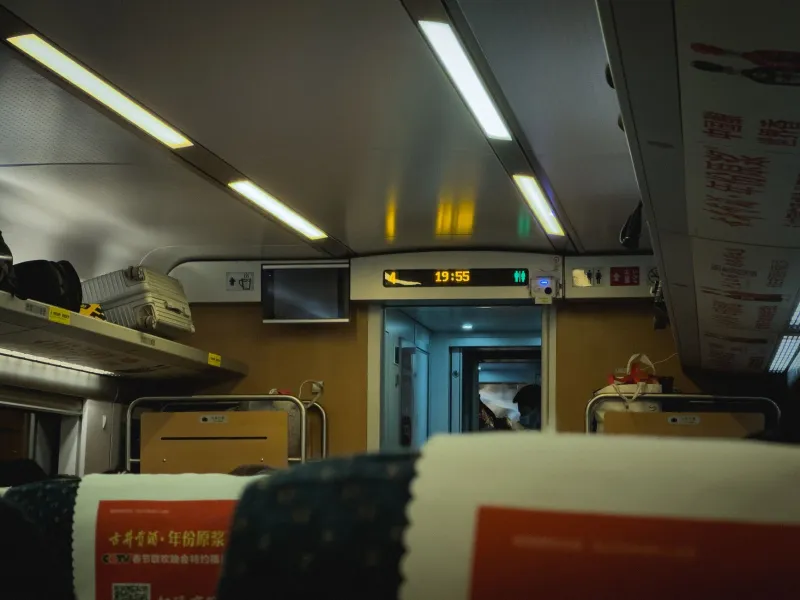
Door Number Four: The Quiet Art of Not Missing a Short-Platform Stop
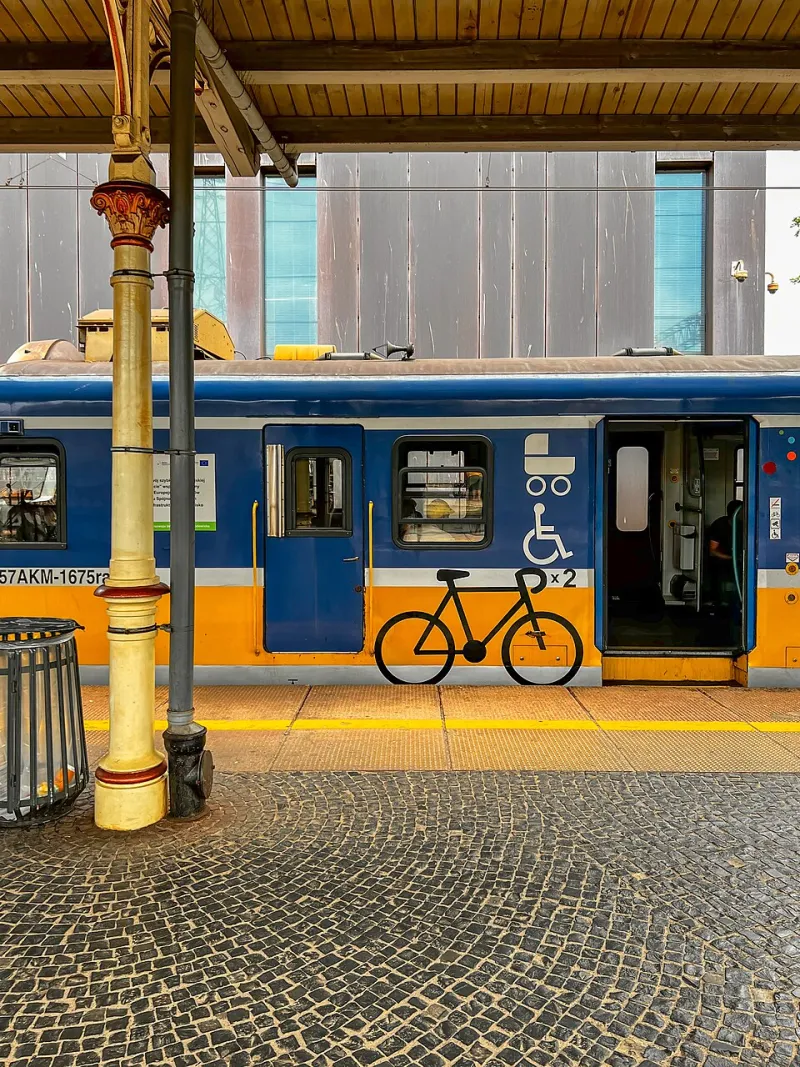
Photo: Krzysztof Popławski, CC BY 4.0, via Wikimedia Commons
There is a particular kind of Interrail panic that has nothing to do with missed connections or lost tickets. The train slows, the platform appears, you stand up with your bag, and then you notice that the station is roughly the length of a corner shop. Only two doors open. Neither of them is anywhere near you.
Short platforms are one of those things that never make the glossy route-planning lists, but they decide whether a day goes smoothly or ends with an hour staring at a rural timetable. The good news is that this is a habit problem, not a luck problem. Once you know what to look for, you can stop treating every stop as a potential ambush.
The stop that only opens three doors
Across Europe, plenty of regional stations were built for a different era of rail travel. Platforms are short, curves are tight, and the train may be longer than the stop itself. In the UK we are used to hearing “the doors at the front of this train will not open” at small stations, but on an Interrail trip the same message can arrive in French, Italian, German, Spanish or Czech, often as a quick burst over the tannoy while you are halfway through a sandwich.
On some rural lines in France, Italy, Spain and central Europe, the train will only release a handful of doors at smaller stops. Sometimes the guard announces a specific coach — “voiture C”, “carrozza 4”, “Wagen 2” — and sometimes they simply expect regular passengers to know. If you are in the wrong part of the train, you may not hear the announcement at all, or you may hear it just as the doors are already closing.
The result is not usually dramatic. It is just annoying. You watch your station slide away, get off at the next stop, and discover that the next train back is in two hours. That is the real cost of a short-platform miss: not danger, but dead time.
Check the stop list before the stop list checks you
A little pre-flight work pays for itself. When you board a regional train, look at the full list of stops on the platform display, the carriage screen or your rail app. You are not looking for the big city names. You are looking for the small ones: the stations with one platform, a shelter, and a name that sounds like a village football team.
In 2026, most national rail apps will show the stops on your service, even if they do not show platform lengths. Use that list as your first warning system. If a stop looks tiny on the map, assume it might be short. If the train is a long regional service and the station is in the middle of nowhere, assume it might be very short.
Onboard screens are helpful when they work. Many modern regional trains cycle through a “train composition” or “carriage position” display, showing where each coach will sit relative to the platform. It may appear as a simple diagram: a platform line, lettered sectors, and little numbered boxes for the coaches. If you see that diagram, take a photo of it. It is the closest thing you have to a guarantee.
Where to find carriage-position diagrams
Carriage-position information turns up in more places than people expect. At larger stations, look for posters or digital screens on the platform showing where each coach will stop. In Germany, Austria, Switzerland and the Netherlands, these displays are often quite good. In France and Italy, they are more common at major stations than rural ones, but the information sometimes appears in the app instead.
Your rail app is the quiet hero here. DB Navigator, ÖBB Scotty, SBB Mobile, SNCF Connect and Trenitalia all offer some form of composition or platform-sector information for many services, though not every regional train will have it. If the app shows sector letters — A, B, C, D — and your coach is in sector C, that is your target. When you get off at a short stop, you want to be in the part of the train that is actually beside the platform, not the part hanging off the end like a forgotten thought.
One useful habit: when you board, check the outside of your coach for its number. Then check the app or platform diagram for that coach’s position at your stop. If the information is missing, ask the guard. A simple “Excusez-moi, est-ce que toutes les portes ouvrent à [station]?” or “Apre tutte le porte a [stazione]?” goes a long way. You do not need perfect grammar. You need the station name and a questioning face.
The ten-minute door routine
This is the routine that stops short-platform stops from becoming short-platform misses.
Set a phone alarm for ten minutes before your stop. Not five. Ten gives you time to pack up, check the platform side, and move through the train without doing that awkward bag-drag along a moving aisle.
Then do three things. First, check the app or onboard screen for the coach position. Second, look at the platform side. In most of Europe, doors open on whichever side faces the platform, but at odd stations it can be either side, so wait for the train to slow before committing. Third, move to the vestibule of the correct coach. Not the aisle. The vestibule. That is where you want to be when the train stops, with your bag upright and your ticket or pass ready if the guard is checking.
If you cannot find the right coach, head for the nearest door that looks like it will open. On a short platform, the guard will usually release the doors nearest the platform entrance or the middle of the train. Standing in the wrong vestibule is better than sitting in the wrong seat.
When it goes wrong
Sometimes you will still miss the stop. Maybe the announcement was in a language you do not speak. Maybe the train was rammed and you could not get through. Maybe the platform was shorter than anyone expected and the guard opened a door you had already passed.
If that happens, do not panic and do not jump. Get off at the next station, find the ticket office or the guard, and explain. In most cases you will be put on the next train back without a fuss, though on rural lines that could be a wait of one to three hours. This is why the ten-minute routine is worth it. It is not about being an anxious traveller. It is about protecting your afternoon.
Short platforms are part of the texture of European rail travel. They are the small stations where the train seems too big for the place, and the guard has to be a bit surgical about which doors to open. Treat them as a quirk to plan for, not a surprise to survive, and you will get off exactly where you meant to — bag in hand, platform underfoot, and the next train still a choice rather than a rescue mission.