Dead Phone, Live Ticket: The 2026 Interrail Power Plan That Keeps You Moving

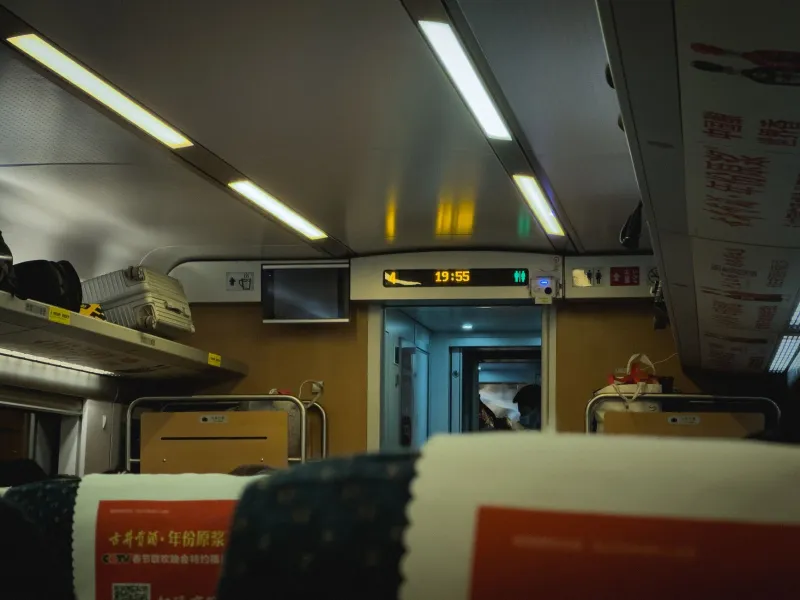
Photo by Photo by Vitalii Kyktov on Unsplash on Unsplash
You can plan a whole Interrail trip in 2026 without a single piece of paper. Your pass lives in an app, your reservations arrive as PDFs, your maps load on demand and your hostel address is in an email. It feels wonderfully light — until the screen goes black on a platform in Cologne and you realise your ticket, timetable and sense of direction are all in the same fragile rectangle.
The fix isn't to lug a filing cabinet around Europe. It's to treat your phone like part of your luggage: something you check, charge and back up before it matters. Here's the Interrail Station plan for keeping the digital side of your trip alive, without turning a relaxed rail adventure into a gadget admin session.
Layer one: make the important things boringly offline
Start before you leave the UK. The goal is simple: if you lose signal, run out of data or misplace your phone for an hour, you should still know which train you're on and where you're sleeping.
Use the official Interrail Rail Planner app to add your journeys and download the trips you need while you're on hotel Wi-Fi. Check that timetables and your mobile pass are available without a live connection — then test it properly. Put your phone in airplane mode and open the app. If you can see your pass and today's journey, you're in good shape. If not, fix it at home, not on a platform in Prague.
For reservations, save every PDF to your phone's files app and email yourself a copy. Name them clearly: 2026-07-14 Paris to Berlin seat 61. Screenshot the QR code and the coach and seat number as a quick visual backup, but don't assume a screenshot replaces the official pass or reservation. It's a memory aid, not a magic ticket.
Do the same for maps. Download offline maps for each city before you arrive, and save your accommodation address as a pin. Add a plain-text note with your train numbers, times, reservation references, pass number, insurance details and an emergency contact. This is the file you'll be very glad to have when you're tired, hungry and standing in the wrong concourse.
Layer two: power-bank maths without the guesswork
Most travel advice says 'bring a power bank' and leaves it there. That's not much use when you're deciding between one big brick and two small ones.
Look at your phone's battery capacity in watt-hours (Wh). Most modern phones sit somewhere around 12–18Wh. Now look at the power bank. A 10,000mAh bank is roughly 37Wh nominal, but after conversion losses you might get 22–27Wh of usable juice — about one and a half phone charges. A 20,000mAh bank is roughly 74Wh nominal, which often translates to two and a half to three solid charges. That difference matters on a long day with maps, cameras and ticket apps all competing for attention.
For most Interrail trips, a 20,000mAh bank in your main bag and a slim 10,000mAh bank in your day bag is a sensible split. Keep both in your cabin baggage when flying: UK airport security and airline rules treat power banks as carry-on items, and there are limits on very large batteries. Check your airline's current rules before you fly, especially if you're tempted by a 30,000mAh monster.
Cables matter as much as capacity. Pack a short USB-C cable for your phone, a spare if you can, and a multi-port charger for hostel sockets. A UK-to-EU plug adapter is essential, but a small extension lead or multi-socket strip can turn one awkward hostel socket into a charging station for phone, bank and headphones. Leave the laptop charger at home unless you genuinely need it.
On the train, treat seat sockets as a bonus rather than a promise. Some trains have them, some don't, and some are temperamental. Charge at every safe opportunity: a cafe stop, a station wait, a hostel breakfast. Try to keep your phone above 20% rather than waiting for the red bar. At 20%, stop treating it as a phone and start treating it as an empty tank.
Layer three: where to charge at stations
Big European stations are getting better at this, but charging points are still uneven. St Pancras, Brussels Midi, Amsterdam Centraal, Berlin Hauptbahnhof, Vienna Hauptbahnhof, Zurich HB and Paris Gare du Nord usually have sockets or charging pockets around seating areas, cafes and station concourses. Treat them as useful pit stops, not guaranteed infrastructure.
My routine is simple: buy a coffee, find a plug socket near a table, and charge for 20 minutes while I check the departure board. Use your own charger in a proper plug socket rather than a public USB port, which can be slow or questionable. Don't leave your phone unattended while it charges, and don't rely on the one socket near the only bench in the station.
If you're on a night train, charge everything before you board. Sleeper cabins may have a socket, but there might be one between two or four people, and it may be in an awkward spot. A power bank on the top bunk is worth more than a hopeful search for an outlet at 1am.
The low-tech fallback when the glass goes black
Sometimes the battery dies anyway. Don't panic, and don't hide. Carry a folded 'day card' in your pocket with the date, train numbers, departure times, reservation references, your pass number and your accommodation address. It weighs nothing and it has saved more trips than any app.
If your phone dies and you're travelling on a mobile pass, speak to a conductor or station staff before you settle in. Explain the situation, show your passport and any printed reservation details, and ask what they need to see. Staff deal with dead phones and flat batteries; what they don't love is a passenger who boards and hopes nobody asks. If you're near a ticket office, ask there first. A printed copy of your pass number is not a replacement for the mobile pass, but it helps staff find you in the system.
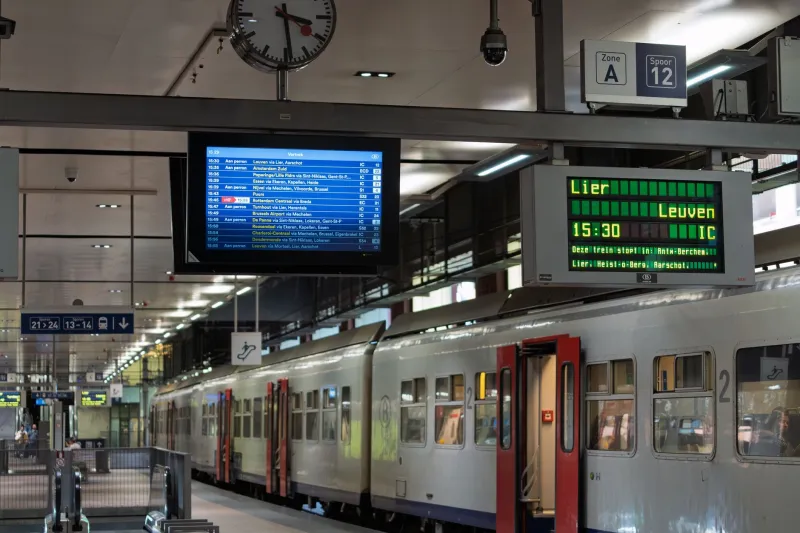
Departure boards still exist. Station announcements still happen. Paper reservation printouts still work. A cheap backup phone — even an old one with your key PDFs and offline maps — can be worth packing if you're doing a long trip. Just check the current Interrail rules on devices before you rely on swapping your pass between phones.
The 20% rule
Interrail in 2026 is wonderfully digital, but the best digital travellers are the ones who don't depend on it. Back up the boring stuff, do the power-bank maths, charge when you can and keep a paper day card in your pocket. Your phone is your pass, your map and your timetable — so give it the same attention you give your passport. Then put it away and enjoy the view.