The Boat Bit: Ferry Legs That Still Earn Their Place on a 2026 Interrail Pass
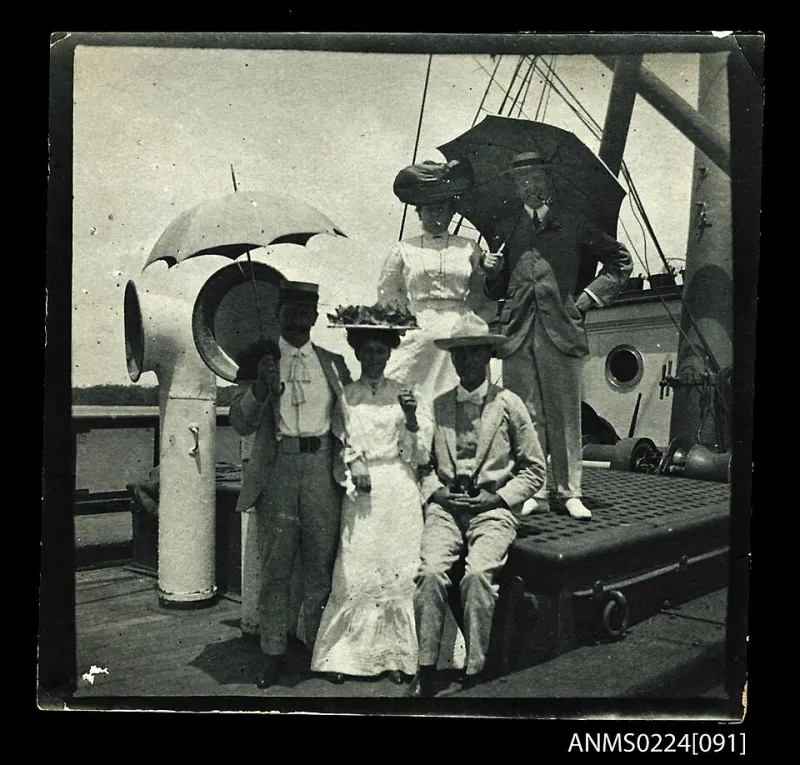
Photo: Australian National Maritime Museum on The Commons, No restrictions, via Wikimedia Commons
Everyone builds an Interrail route out of trains. Fair enough — it's called Interrail, not Interfloat. But somewhere in the middle of planning a six-country monster, it's worth asking whether a stretch of water could do a better job than a very long rail day through a country you didn't especially want to see.
In 2026 the answer is still yes in a handful of places. A valid pass continues to unlock discounts on a decent spread of European ferry routes, several Greek island hops included, and — the bit most people miss — those discounted sailings don't touch your travel days. You're paying for the crossing, not for the privilege of standing on a deck.
Why a boat usually doesn't cost you a travel day
Here's the distinction that matters. A ferry partner discount is a commercial perk: show a valid pass, get money off the ticket. You're still buying a ferry ticket, so it's a cash transaction, not a rail travel day. Your flexi pass stays intact for the ten trains you actually care about.
The exception is where a ferry is part of the rail service itself. The classic is the Strait of Messina — trains between mainland Italy and Sicily are still shunted onto the boat, and you stay with the train. That's not a discount, it's a rail leg that happens to float, and it's the most satisfying twenty minutes in Italian transport.
So the rule of thumb: discounted crossing = pay money, keep the day. Included crossing = spend the day, pay nothing. Check which one you're booking before you start counting.
The Adriatic run: the crossing that replaces a rail slog
The Italy–Greece corridor is the one worth reorganising a route around. Ferries from Ancona, Bari and (seasonally) Venice run to Igoumenitsa and Patras, and Interrail pass holders have historically picked up roughly 30% off with the operators on that corridor, with smaller discounts on neighbouring lines.
Why it works: the overland alternative — up through the Balkans and back down — is a beautiful route but it's a long one, with borders, buses and a lot of hours. An overnight sailing from Ancona gets you to Patras in the morning having also solved a night's accommodation. Deck passage is cheap; a cabin costs extra but still often undercuts a budget hotel.
Practical notes: Ancona's port is a short bus or a brisk walk from the station, Bari's is closer still. Most of these ships are proper ferries rather than cruise-comfort, so bring layers, a refillable bottle and something to read. July and August sell out — foot passengers get squeezed last.
Greek island hops that don't burn pass days
This is where the discount quietly earns its keep. Greek domestic ferry operators have long offered pass holders around 30% off, which turns island-hopping from a budget decision into a timetable one. Because these are discounted crossings, a week of island hopping on a Greek island cluster won't chip a single travel day off your pass — it just costs ferry fares.
That said, Greek domestic ferries are their own project: high-season capacity is tight, fast catamarans cost more than slow boats, and the timetable is a suggestion rather than a promise in a meltemi wind. Book the longer legs, stay flexible on the short ones.
Scandinavian shortcuts where the boat beats the loop
Northern Europe has some genuinely useful water crossings. The Danish west coast to southern Norway — Hirtshals across to Kristiansand or Larvik — cuts out an enormous rail loop via Sweden and puts you near the south Norwegian lines in a few hours. The Baltic routes between Germany and Denmark, and the short hops between Denmark and Sweden's west coast, can similarly trim a day of backtracking.
Interrail discounts on these northern operators tend to sit in the 20% bracket rather than anything dramatic, so the case here is time, not money. Run both versions of the route through a timetable before you commit: sometimes the train through Sweden is cheaper and only marginally longer.
UK launchpads: starting the trip with salt in your hair
For anyone in Britain dodging the airport, the North Sea crossings are the obvious first move — the overnight Harwich–Hook of Holland sailing, the Hull–Rotterdam run, and the Channel routes from Portsmouth and Plymouth if you're starting west. Several of these operators have offered pass-holder discounts at some point, but the schemes change, so treat the Interrail ferry pages as the first port of call rather than a leaflet you read in 2019.
Two things to remember. First, a Global Pass allows a limited number of travel days in your own country — the ferry itself isn't one, but the train to the port might be. Second, discounts between two countries usually need your pass to cover both of them, so a Harwich–Hook discount sits oddly with a pass that doesn't include the Netherlands. Check the small print before you assume.
How to actually book the discount
A short, unglamorous checklist:
- Buy the pass first. You need the pass number, and most operators want it at the time of booking — not at the port.
- Book direct where you can. Aggregators rarely apply Interrail fares. Use the operator's own site or the Interrail ferry partner page.
- Confirm the crossing date sits inside the pass validity. Some operators check the pass on the sailing date, not the booking date.
- Budget the extras. Port taxes, fuel surcharges, cabins and vehicle supplements often aren't discounted even when the base fare is.
- Keep the pass handy at check-in. Staff will want to see it, and a screenshot of a booking isn't a pass.
When to skip the boat
Be honest with yourself about the trade. Ferries are slower, port terminals are rarely at the station door, and a discounted fare is still a fare — a 30% saving on a route you didn't need is a 100% waste. If the train is faster, cheaper, and drops you in a city centre, take the train.
The boat wins for three reasons only: it replaces a punishing rail day, it removes a hotel night, or it opens somewhere the rails can't reach. Get one of those three out of a crossing and it's worth the detour. Otherwise, wave at it from the platform.